Nude art has long served as a canvas for humanity's most intimate explorations, blending aesthetic beauty with deep cultural significance. From the idealized forms of ancient Greece to the raw, unfiltered images of contemporary photography, the depiction of the human body has evolved in profound ways, reflecting changing artistic sensibilities and societal attitudes.
Classical Foundations: The Birth of Idealized Beauty
The roots of nude art trace back to ancient civilizations where the human body was revered as a testament to divine creation. In classical Greek sculpture and painting, the nude figure became an embodiment of physical perfection and moral virtue. Artists sought to capture the ideal form, emphasizing balance, proportion, and harmony. These depictions were not merely erotic but deeply philosophical, celebrating the human form as a mirror of the cosmos.
During the Renaissance, artists like Leonardo da Vinci and Michelangelo pushed the boundaries of anatomical accuracy and emotional depth. Their nudes, such as Leonardo's "Vitruvian Man" and Michelangelo's "David," became iconic representations of human potential, combining scientific observation with artistic genius. These works elevated the nude from mere sensuality to a symbol of intellect and divine beauty.
The Baroque and Rococo: Drama and Sensuality
The Baroque period introduced a new level of intensity to nude art, with artists like Caravaggio and Bernini using chiaroscuro and dynamic compositions to create visceral emotional impact. Bernini's "Ecstasy of Saint Teresa" and Caravaggio's "The Calling of Saint Matthew" showcased the nude body as a vessel of spiritual and physical experience, blending religious fervor with sensual beauty.
In the Rococo era, artists like François Boucher and Jean-Honoré Fragonard transformed the nude into a celebration of hedonism and pleasure. Their works, often featuring mythological or pastoral themes, depicted the human form in playful, flirtatious ways, capturing the essence of 18th-century aristocratic life. These nudes were less about anatomical precision and more about evoking a sense of joy and sensuality.
The 19th Century: Realism and Impressionism
The 19th century saw a shift towards more naturalistic representations of the human body. Artists like Gustave Courbet and Édouard Manet challenged traditional academic standards, depicting nudes in unromanticized, everyday settings. Courbet's "The Origin of the World" and Manet's "Olympia" were revolutionary, confronting viewers with raw, unapologetic depictions of female sexuality that had never been seen before.
Impressionists like Edgar Degas and Mary Cassatt approached the nude from a more personal, intimate perspective. Degas' ballet dancers and Cassatt's mother-and-child scenes captured the beauty of the human form in its most private moments, emphasizing the emotional connection between figures. These works demonstrated that the nude could be powerful without being overtly erotic.
Modernism and the 20th Century: Abstraction and Experimentation
The early 20th century brought radical changes to nude art as modernist movements sought to break away from traditional forms. Artists like Pablo Picasso, Henri Matisse, and Amedeo Modigliani deconstructed the human body, exploring its essence rather than its physical reality. Picasso's "Les Demoiselles d'Avignon" and Matisse's "The Dance" pushed the boundaries of form and color, transforming the nude into a vehicle for abstract expression.
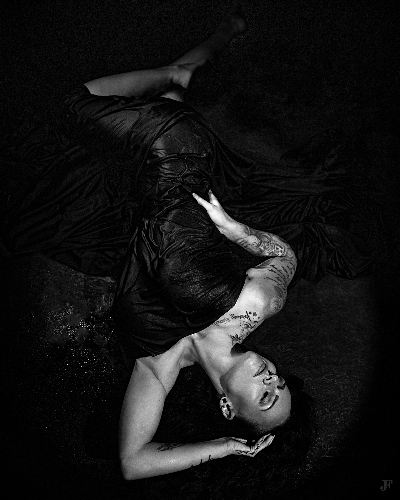
Photography also played a significant role in this evolution, with artists like Man Ray, Edward Weston, and Irving Penn using the medium to capture the nude in new ways. These photographers combined technical mastery with artistic vision, creating images that were both realistic and highly stylized. Their work demonstrated how photography could rival painting in terms of artistic depth and emotional resonance.
Contemporary Nude Art: Diversity and Expression
Today's nude art is characterized by unprecedented diversity and freedom of expression. Artists from various cultures and backgrounds explore the human form through a multitude of perspectives, challenging traditional notions of beauty and sexuality. Contemporary works often address issues of identity, body politics, and social justice, using the nude as a means of personal and collective expression.
Photographers like Annie Leibovitz, Helmut Newton, and Cindy Sherman have redefined the nude portrait, blending high fashion with artistic experimentation. Their works capture not just the physical beauty of the human form but also its cultural and symbolic dimensions. Digital art and mixed media have further expanded the possibilities, allowing artists to manipulate and transform the nude in ways previously unimaginable.
As we look to the future, nude art continues to evolve, reflecting our changing world and diverse experiences. The nude remains a powerful medium for exploring the human condition, connecting us to our shared history while pushing the boundaries of artistic expression. In its most elegant form, nude art is not merely about the body but about the soul, capturing the essence of what it means to be human.